Month: February 2026

Cyber Security Starts Here

Microsoft Finds “Summarize with AI” Prompts Manipulating Chatbot Recommendations

New research from Microsoft has revealed that legitimate businesses are gaming artificial intelligence (AI) chatbots via the “Summarize with AI” button that’s being increasingly placed on websites in ways that mirror classic search engine poisoning (SEO). The new AI hijacking technique has been codenamed AI Recommendation Poisoning by the Microsoft Defender Security Research Team. The…
Read more

Apple Tests End-to-End Encrypted RCS Messaging in iOS 26.4 Developer Beta

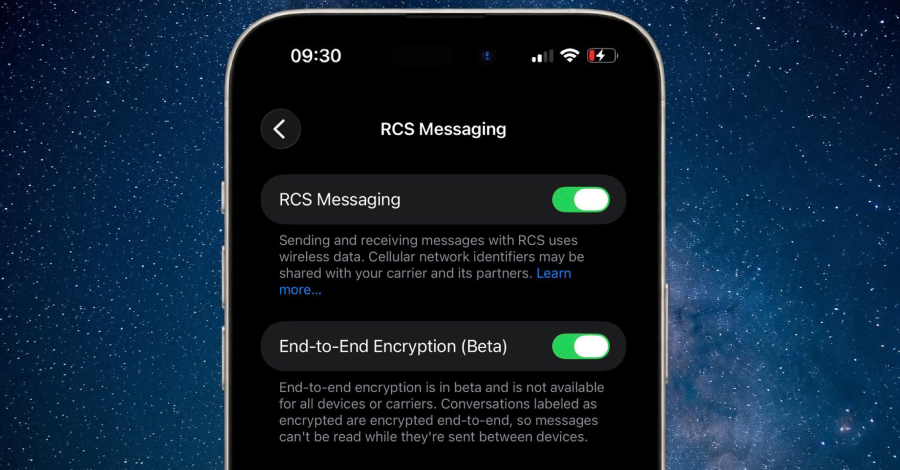
Apple on Monday released a new developer beta of iOS and iPadOS with support for end-to-end encryption (E2EE) in Rich Communications Services (RCS) messages. The feature is currently available for testing in iOS and iPadOS 26.4 Beta, and is expected to be shipped to customers in a future update for iOS, iPadOS, macOS, and watchOS.…
Read more

Infostealer Steals OpenClaw AI Agent Configuration Files and Gateway Tokens

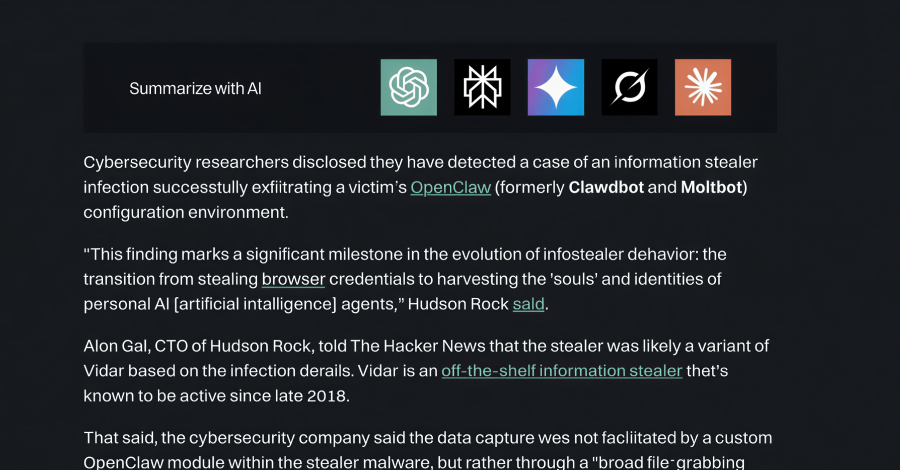
Cybersecurity researchers disclosed they have detected a case of an information stealer infection successfully exfiltrating a victim’s OpenClaw (formerly Clawdbot and Moltbot) configuration environment. “This finding marks a significant milestone in the evolution of infostealer behavior: the transition from stealing browser credentials to harvesting the ‘souls’ and identities of personal AI [

Study Uncovers 25 Password Recovery Attacks in Major Cloud Password Managers

A new study has found that multiple cloud-based password managers, including Bitwarden, Dashlane, and LastPass, are susceptible to password recovery attacks under certain conditions. “The attacks range in severity from integrity violations to the complete compromise of all vaults in an organization,” researchers Matteo Scarlata, Giovanni Torrisi, Matilda Backendal, and Kenneth G. Paterson said.

Weekly Recap: Outlook Add-Ins Hijack, 0-Day Patches, Wormable Botnet & AI Malware

This week’s recap shows how small gaps are turning into big entry points. Not always through new exploits, often through tools, add-ons, cloud setups, or workflows that people already trust and rarely question. Another signal: attackers are mixing old and new methods. Legacy botnet tactics, modern cloud abuse, AI assistance, and supply-chain exposure are being…
Read more

Safe and Inclusive E‑Society: How Lithuania Is Bracing for AI‑Driven Cyber Fraud

Presentation of the KTU Consortium Mission ‘A Safe and Inclusive Digital Society’ at the Innovation Agency event ‘Innovation Breakfast: How Mission-Oriented Science and Innovation Programmes Will Address Societal Challenges’. Technologies are evolving fast, reshaping economies, governance, and daily life. Yet, as innovation accelerates, so do digital risks. Technological change is no longer

New ZeroDayRAT Mobile Spyware Enables Real-Time Surveillance and Data Theft

Cybersecurity researchers have disclosed details of a new mobile spyware platform dubbed ZeroDayRAT that’s being advertised on Telegram as a way to grab sensitive data and facilitate real-time surveillance on Android and iOS devices. “The developer runs dedicated channels for sales, customer support, and regular updates, giving buyers a single point of access to a…
Read more

New Chrome Zero-Day (CVE-2026-2441) Under Active Attack — Patch Released

Google on Friday released security updates for its Chrome browser to address a security flaw that it said has been exploited in the wild. The high-severity vulnerability, tracked as CVE-2026-2441 (CVSS score: 8.8), has been described as a use-after-free bug in CSS. Security researcher Shaheen Fazim has been credited with discovering and reporting the shortcoming…
Read more

Microsoft Discloses DNS-Based ClickFix Attack Using Nslookup for Malware Staging

Microsoft has disclosed details of a new version of the ClickFix social engineering tactic in which the attackers trick unsuspecting users into running commands that carry out a Domain Name System (DNS) lookup to retrieve the next-stage payload. Specifically, the attack relies on using the “nslookup” (short for nameserver lookup) command to execute a custom…
Read more

Google Ties Suspected Russian Actor to CANFAIL Malware Attacks on Ukrainian Orgs

A previously undocumented threat actor has been attributed to attacks targeting Ukrainian organizations with malware known as CANFAIL. Google Threat Intelligence Group (GTIG) described the hack group as possibly affiliated with Russian intelligence services. The threat actor is assessed to have targeted defense, military, government, and energy organizations within the Ukrainian regional and