
Month: February 2026

Cyber Security Starts Here

German Agencies Warn of Signal Phishing Targeting Politicians, Military, Journalists

Germany’s Federal Office for the Protection of the Constitution (aka Bundesamt für Verfassungsschutz or BfV) and Federal Office for Information Security (BSI) have issued a joint advisory warning of a malicious cyber campaign undertaken by a likely state-sponsored threat actor that involves carrying out phishing attacks over the Signal messaging app. “The focus is on…
Read more
China-Linked DKnife AitM Framework Targets Routers for Traffic Hijacking, Malware Delivery

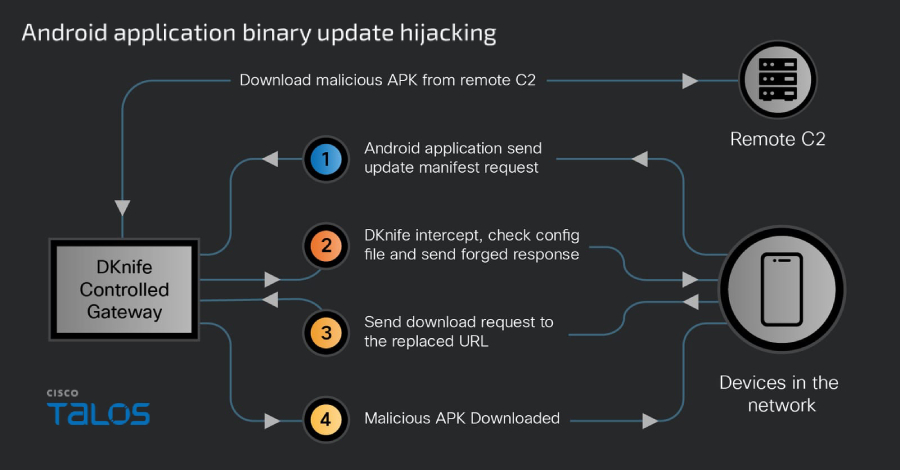
Cybersecurity researchers have taken the wraps off a gateway-monitoring and adversary-in-the-middle (AitM) framework dubbed DKnife that’s operated by China-nexus threat actors since at least 2019. The framework comprises seven Linux-based implants that are designed to perform deep packet inspection, manipulate traffic, and deliver malware via routers and edge devices. Its primary targets seem to

CISA Orders Removal of Unsupported Edge Devices to Reduce Federal Network Risk

The U.S. Cybersecurity and Infrastructure Security Agency (CISA) has ordered Federal Civilian Executive Branch (FCEB) agencies to strengthen asset lifecycle management for edge network devices and remove those that no longer receive security updates from original equipment manufacturers (OEMs) over the next 12 to 18 months. The agency said the move is to drive down…
Read more

Asian State-Backed Group TGR-STA-1030 Breaches 70 Government, Infrastructure Entities

A previously undocumented cyber espionage group operating from Asia broke into the networks of at least 70 government and critical infrastructure organizations across 37 countries over the past year, according to new findings from Palo Alto Networks Unit 42. In addition, the hacking crew has been observed conducting active reconnaissance against government infrastructure associated with…
Read more

How Samsung Knox Helps Stop Your Network Security Breach

As you know, enterprise network security has undergone significant evolution over the past decade. Firewalls have become more intelligent, threat detection methods have advanced, and access controls are now more detailed. However (and it’s a big “however”), the increasing use of mobile devices in business operations necessitates network security measures that are specifically

Compromised dYdX npm and PyPI Packages Deliver Wallet Stealers and RAT Malware

Cybersecurity researchers have discovered a new supply chain attack in which legitimate packages on npm and the Python Package Index (PyPI) repository have been compromised to push malicious versions to facilitate wallet credential theft and remote code execution. The compromised versions of the two packages are listed below – @dydxprotocol/v4-client-js (npm) – 3.4.1, 1.22.1, 1.15.2,…
Read more

AISURU/Kimwolf Botnet Launches Record-Setting 31.4 Tbps DDoS Attack

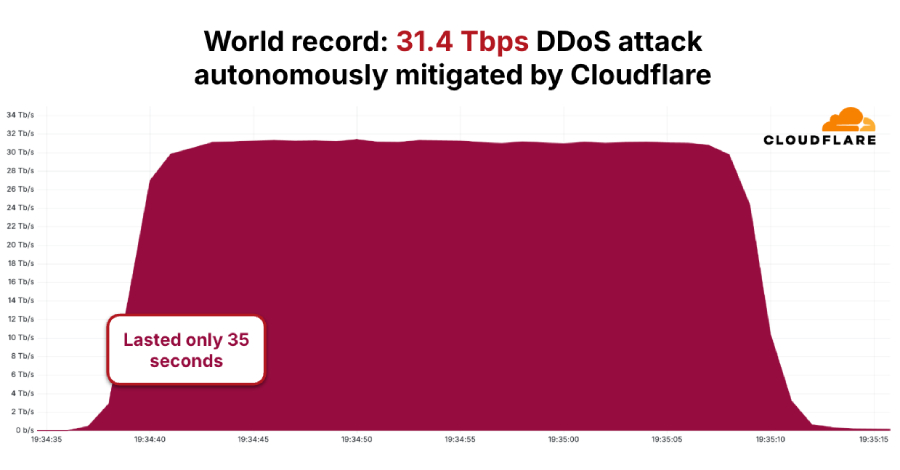
The distributed denial-of-service (DDoS) botnet known as AISURU/Kimwolf has been attributed to a record-setting attack that peaked at 31.4 Terabits per second (Tbps) and lasted only 35 seconds. Cloudflare, which automatically detected and mitigated the activity, said it’s part of a growing number of hyper-volumetric HTTP DDoS attacks mounted by the botnet in the fourth…
Read more

ThreatsDay Bulletin: Codespaces RCE, AsyncRAT C2, BYOVD Abuse, AI Cloud Intrusions & 15+ Stories

This week didn’t produce one big headline. It produced many small signals — the kind that quietly shape what attacks will look like next. Researchers tracked intrusions that start in ordinary places: developer workflows, remote tools, cloud access, identity paths, and even routine user actions. Nothing looked dramatic on the surface. That’s the point. Entry…
Read more

The Buyer’s Guide to AI Usage Control

Today’s “AI everywhere” reality is woven into everyday workflows across the enterprise, embedded in SaaS platforms, browsers, copilots, extensions, and a rapidly expanding universe of shadow tools that appear faster than security teams can track. Yet most organizations still rely on legacy controls that operate far away from where AI interactions actually occur. The result…
Read more

Infy Hackers Resume Operations with New C2 Servers After Iran Internet Blackout Ends

The elusive Iranian threat group known as Infy (aka Prince of Persia) has evolved its tactics as part of efforts to hide its tracks, even as it readied new command-and-control (C2) infrastructure coinciding with the end of the widespread internet blackout the regime imposed at the start of January 2026. “The threat actor stopped maintaining…
Read more