Month: January 2026

Cyber Security Starts Here

Fortinet Fixes Critical FortiSIEM Flaw Allowing Unauthenticated Remote Code Execution

Fortinet has released updates to fix a critical security flaw impacting FortiSIEM that could allow an unauthenticated attacker to achieve code execution on susceptible instances. The operating system (OS) injection vulnerability, tracked as CVE-2025-64155, is rated 9.4 out of 10.0 on the CVSS scoring system. “An improper neutralization of special elements used in an OS…
Read more

New Research: 64% of 3rd-Party Applications Access Sensitive Data Without Justification

Research analyzing 4,700 leading websites reveals that 64% of third-party applications now access sensitive data without business justification, up from 51% in 2024.  Government sector malicious activity spiked from 2% to 12.9%, while 1 in 7 Education sites show active compromise. Specific offenders: Google Tag Manager (8% of violations), Shopify (5%), Facebook Pixel (4%). Download…
Read more

Microsoft Fixes 114 Windows Flaws in January 2026 Patch, One Actively Exploited

Microsoft on Tuesday rolled out its first security update for 2026, addressing 114 security flaws, including one vulnerability that it said has been actively exploited in the wild. Of the 114 flaws, eight are rated Critical, and 106 are rated Important in severity. As many as 58 vulnerabilities have been classified as privilege escalation, followed…
Read more

Long-Running Web Skimming Campaign Steals Credit Cards From Online Checkout Pages

Cybersecurity researchers have discovered a major web skimming campaign that has been active since January 2022, targeting several major payment networks like American Express, Diners Club, Discover, JCB Co., Ltd., Mastercard, and UnionPay. “Enterprise organizations that are clients of these payment providers are the most likely to be impacted,” Silent Push said in a report…
Read more

Malicious Chrome Extension Steals MEXC API Keys by Masquerading as Trading Tool

Cybersecurity researchers have disclosed details of a malicious Google Chrome extension that’s capable of stealing API keys associated with MEXC, a centralized cryptocurrency exchange (CEX) available in over 170 countries, while masquerading as a tool to automate trading on the platform. The extension, named MEXC API Automator (ID: pppdfgkfdemgfknfnhpkibbkabhghhfh), has 29 downloads and is still

[Webinar] Securing Agentic AI: From MCPs and Tool Access to Shadow API Key Sprawl

AI agents are no longer just writing code. They are executing it. Tools like Copilot, Claude Code, and Codex can now build, test, and deploy software end-to-end in minutes. That speed is reshaping engineering—but it’s also creating a security gap most teams don’t see until something breaks. Behind every agentic workflow sits a layer few…
Read more

New Advanced Linux VoidLink Malware Targets Cloud and container Environments

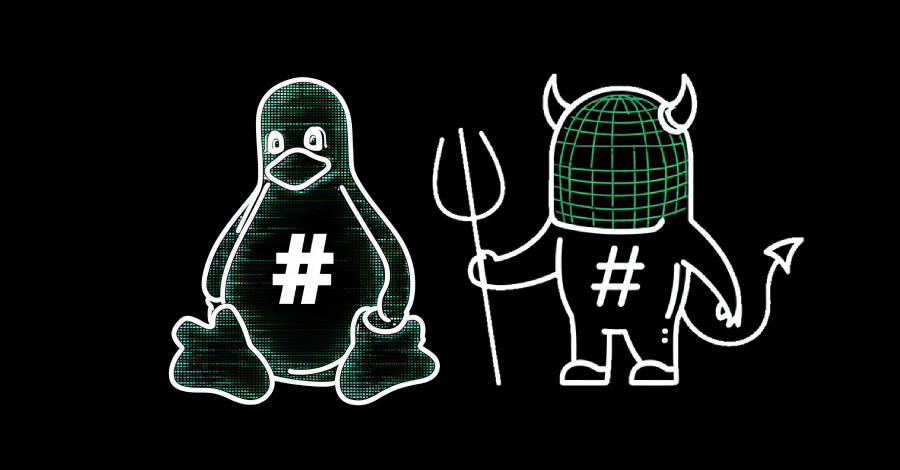
Cybersecurity researchers have disclosed details of a previously undocumented and feature-rich malware framework codenamed VoidLink that’s specifically designed for long-term, stealthy access to Linux-based cloud environments According to a new report from Check Point Research, the cloud-native Linux malware framework comprises an array of custom loaders, implants, rootkits, and modular

What Should We Learn From How Attackers Leveraged AI in 2025?

Old Playbook, New Scale: While defenders are chasing trends, attackers are optimizing the basics The security industry loves talking about “new” threats. AI-powered attacks. Quantum-resistant encryption. Zero-trust architectures. But looking around, it seems like the most effective attacks in 2025 are pretty much the same as they were in 2015. Attackers are exploiting the same…
Read more

ServiceNow Patches Critical AI Platform Flaw Allowing Unauthenticated User Impersonation

ServiceNow has disclosed details of a now-patched critical security flaw impacting its ServiceNow AI Platform that could enable an unauthenticated user to impersonate another user and perform arbitrary actions as that user. The vulnerability, tracked as CVE-2025-12420, carries a CVSS score of 9.3 out of 10.0 “This issue […] could enable an unauthenticated user to…
Read more

New Malware Campaign Delivers Remcos RAT Through Multi-Stage Windows Attack

Cybersecurity researchers have disclosed details of a new campaign dubbed SHADOW#REACTOR that employs an evasive multi-stage attack chain to deliver a commercially available remote administration tool called Remcos RAT and establish persistent, covert remote access. “The infection chain follows a tightly orchestrated execution path: an obfuscated VBS launcher executed via wscript.exe invokes a