
Month: January 2026

Cyber Security Starts Here

Chainlit AI Framework Flaws Enable Data Theft via File Read and SSRF Bugs

Security vulnerabilities were uncovered in the popular open-source artificial intelligence (AI) framework Chainlit that could allow attackers to steal sensitive data, which may allow for lateral movement within a susceptible organization. Zafran Security said the high-severity flaws, collectively dubbed ChainLeak, could be abused to leak cloud environment API keys and steal sensitive files, or

VoidLink Linux Malware Framework Built with AI Assistance Reaches 88,000 Lines of Code

The recently discovered sophisticated Linux malware framework known as VoidLink is assessed to have been developed by a single person with assistance from an artificial intelligence (AI) model. That’s according to new findings from Check Point Research, which identified operational security blunders by malware’s author that provided clues to its developmental origins. The latest insight…
Read more

North Korea-Linked Hackers Target Developers via Malicious VS Code Projects

The North Korean threat actors associated with the long-running Contagious Interview campaign have been observed using malicious Microsoft Visual Studio Code (VS Code) projects as lures to deliver a backdoor on compromised endpoints. The latest finding demonstrates continued evolution of the new tactic that was first discovered in December 2025, Jamf Threat Labs said. “This…
Read more

Three Flaws in Anthropic MCP Git Server Enable File Access and Code Execution

A set of three security vulnerabilities has been disclosed in mcp-server-git, the official Git Model Context Protocol (MCP) server maintained by Anthropic, that could be exploited to read or delete arbitrary files and execute code under certain conditions. “These flaws can be exploited through prompt injection, meaning an attacker who can influence what an AI…
Read more

Hackers Use LinkedIn Messages to Spread RAT Malware Through DLL Sideloading

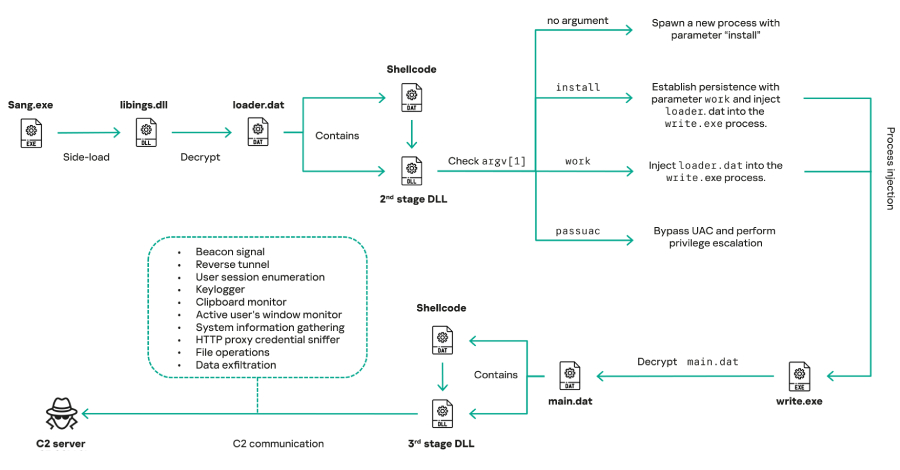
Cybersecurity researchers have uncovered a new phishing campaign that exploits social media private messages to propagate malicious payloads, likely with the intent to deploy a remote access trojan (RAT). The activity delivers “weaponized files via Dynamic Link Library (DLL) sideloading, combined with a legitimate, open-source Python pen-testing script,” ReliaQuest said in a report shared with

The Hidden Risk of Orphan Accounts

The Problem: The Identities Left Behind As organizations grow and evolve, employees, contractors, services, and systems come and go – but their accounts often remain. These abandoned or “orphan” accounts sit dormant across applications, platforms, assets, and cloud consoles. The reason they persist isn’t negligence – it’s fragmentation.  Traditional IAM and IGA systems are designed

Evelyn Stealer Malware Abuses VS Code Extensions to Steal Developer Credentials and Crypto

Cybersecurity researchers have disclosed details of a malware campaign that’s targeting software developers with a new information stealer called Evelyn Stealer by weaponizing the Microsoft Visual Studio Code (VS Code) extension ecosystem. “The malware is designed to exfiltrate sensitive information, including developer credentials and cryptocurrency-related data. Compromised developer

Cloudflare Fixes ACME Validation Bug Allowing WAF Bypass to Origin Servers

Cloudflare has addressed a security vulnerability impacting its Automatic Certificate Management Environment (ACME) validation logic that made it possible to bypass security controls and access origin servers.  “The vulnerability was rooted in how our edge network processed requests destined for the ACME HTTP-01 challenge path (/.well-known/acme-challenge/*),” the web infrastructure

Google Gemini Prompt Injection Flaw Exposed Private Calendar Data via Malicious Invites

Cybersecurity researchers have disclosed details of a security flaw that leverages indirect prompt injection targeting Google Gemini as a way to bypass authorization guardrails and use Google Calendar as a data extraction mechanism. The vulnerability, Miggo Security’s Head of Research, Liad Eliyahu, said, made it possible to circumvent Google Calendar’s privacy controls by hiding a…
Read more

⚡ Weekly Recap: Fortinet Exploits, RedLine Clipjack, NTLM Crack, Copilot Attack & More

In cybersecurity, the line between a normal update and a serious incident keeps getting thinner. Systems that once felt reliable are now under pressure from constant change. New AI tools, connected devices, and automated systems quietly create more ways in, often faster than security teams can react. This week’s stories show how easily a small…
Read more